Since I haven't finished today's story yet, this is one based on the Arthurian legends. Plenty of writers have offered their takes on King Arthur and his court at Camelot. I'm not tempted to join in. I wrote this because the dialogue occurred to me during a long commute.
Kay's Prank
"Cookie was making something in the kitchen and it didn't turn out," said Kay. He set down a thick, clay mug with a heavy syrup in it. It seemed that the syrup had hardened around a spoon that had been used to dip into it. "Bet you a penny that you can't get the spoon out of that jar."
"Without breaking it?" Lancelot touched the wooden handle.
"Without breaking it, of course. Cookie would be mad."
Sir Lancelot dug into his task. The other knights urged him on. When he couldn't get it on the first try, the knights laughed. One said, "I think he moved it!"
"Really?" Kay peered close. "Maybe. That stuff is murder, though. Try it again, Lance."
After several tries and more tries again by Kay and Palamedes, they all agreed that the spoon couldn't be moved.
"Hah! Arthur will be here soon." Kay pounded the table in delight. "Let's give it to him. And when he can't get it out we'll say, 'You can pull a sword from a stone but not a spoon from a jar?'"
Lancelot laughed. He and Kay were the only ones brave enough to play a prank like this. Sure enough, in a few minutes Arthur and Merlin retired from the courtroom and strode into the antechamber.
"Arthur, my lord," said Kay. "You must give this spoon a go. I'll bet you a penny that you can't pull it out of the jar."
"Without breaking the jar," added Lancelot.
"Three tries for a penny."
"Really?" exclaimed Arthur. "That's awfully generous."
Instead of pulling on the spoon immediately, he inspected it. His gaze lasted only a few seconds but it made Lancelot and Kay uncomfortable.
"Who else has tried this?" said Arthur.
"Everyone," admitted Kay.
"Right." Arthur plucked the jar off the table and walked across the back hallway into the second kitchen. There, he found a pot of water boiling and carefully set the jar inside it. The cook's assistant alertly moved aside to give the king room. "Soon have it out."
"That's cheating!" said Kay. He followed him halfway, about forty feet.
"It's not," countered Merlin. "Quite according to your rules. Was this a prank, Kay?"
"No."
"Yes," said Lancelot. "And when he couldn't do it, we were going to tease him about how he pulled his sword from a stone but couldn't take a spoon from a cup."
"Serves you right, then," concluded Merlin. He flipped his beard in Lance's direction.
"What should I do with my penny, Merlin?" asked Arthur as he rubbed his hands in exaggerated anticipation.
"Spend it all in one place."
"On?"
"Give it as a treat, I think, for someone who's been good lately. Your page or the scullery maid or the dog boy."
"I haven't given the dog boy anything in quite a while. And the dogs have been quite good."
"Done. You have got a penny, haven't you, Kay?" Merlin raised his eyebrow at the senschal.
"Damn." Kay felt for his coin purse. "I'd better go get one. But that spoon isn't out yet. The bet isn't over. Will you wait until I come back?"
"If it's soon," agreed Arthur.
"Damn again," muttered Kay. As he left, he could be heard to utter, "At least it's the dog boy."
Arthur and Merlin relaxed at the table. Lancelot and Palamedes rose to make room. The older knight paced while the younger one propped himself against a wall.
"Why does Sir Kay like the dog boy so much?" asked Lancelot.
"He was a dog boy himself, for a while."
"What, a knight's son?"
"It was for only a summer, as a punishment. Kay wasn't punished by it. He wasn't very good at it either, in the beginning. But he was getting better toward the end. I think his father pulled him from the job because it was clear that Kay was enjoying himself. He always did like dogs. He wasn't good with them, not until he spent time as their caretaker. But he always admired them."
"Why do you ask?" Merlin's eyes narrowed.
"I just wondered … why did you choose the dog boy?"
"It will take the sting out of losing the bet. That's something you may want to remember, Lance, as you keep winning game after game. You're good. Sometimes it's important to take the sting out of the losses for other men."
"No one does that for me," observed Lancelot. "The few times that Gawain has won ..."
"It's something that winners do," said Arthur in an overriding voice. "Winners can afford to be gracious. Even Gawain is gracious with those he beats handily. He would never be that way with you unless he started beating you all the time. Is that how you want it?"
Lance's head twitched. A shudder ran through him and visibly moved his shoulders.

Stories on life, death, enlightenment, zen buddhism, religion, philosophy, stoicism, meditation, daoism, kindness but not meekness, and samsara.
Sunday, May 31, 2015

Sunday, May 24, 2015
Not Zen 162: Crutches
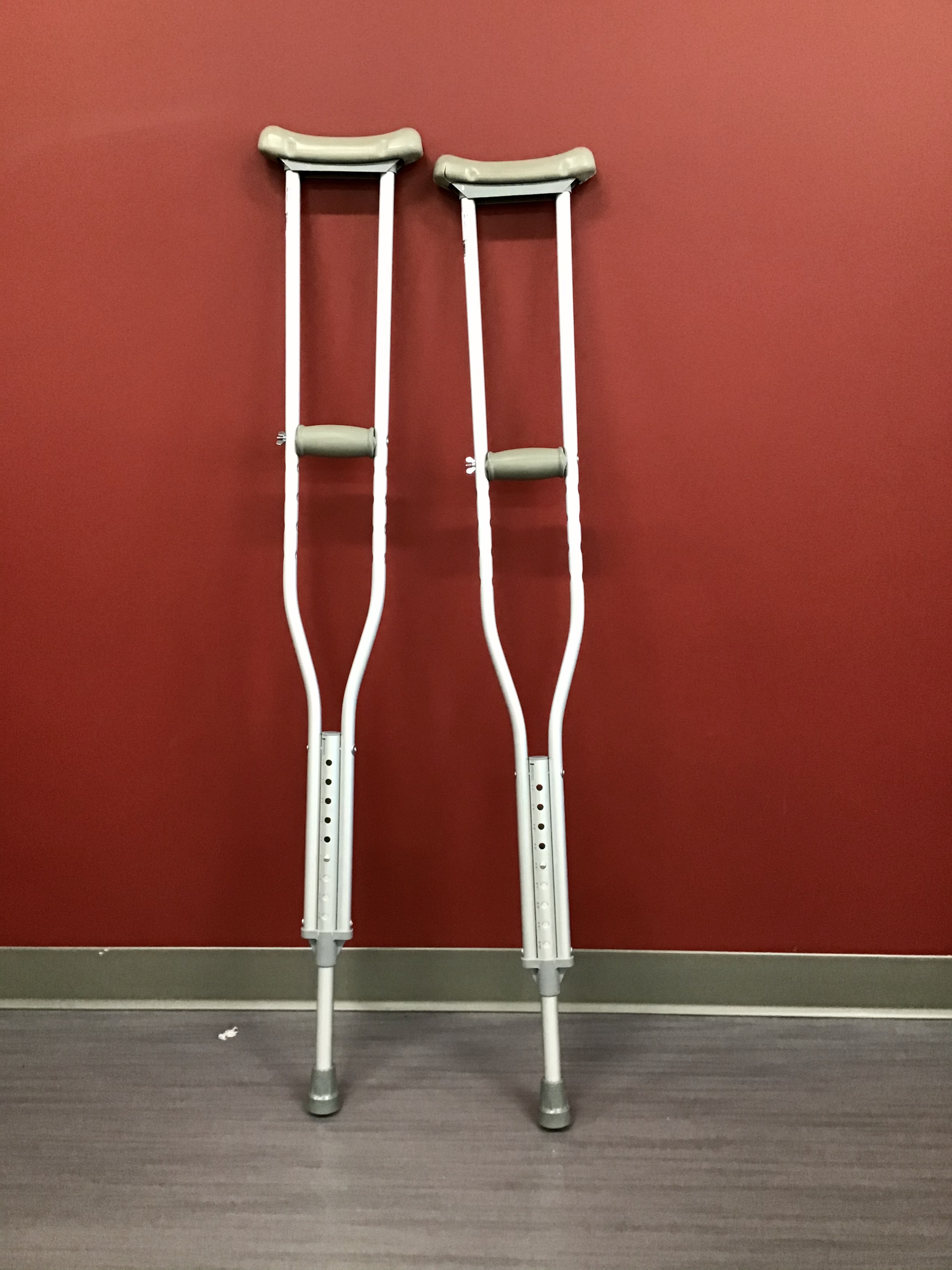 |
| c. Jessica Fisher via Wikimedia Commons |
Crutches
"Nine months." The boy's mother folded her arms.
"No wonder he's complaining." The doctor nodded. "He must feel crippled. Why didn't you bring him to me earlier?"
"He said his other doctor was doing it."
"What other doctor?" She spread her arms wide, hands up.
"The one near his father's house." The woman shifted. She glanced at her son on the examining table. The young fellow remained where he was, lying down in shorts and a shirt, but he openly listened to every word. "It turns out he did it himself, though. He admitted it. His father and I are separated. I moved out a couple of years ago and I took him with me. But he wasn't getting enough sympathy for his situation at school, I guess."
The boy sat up. He put his hands on either side of his hips as if he were about to hop down to the floor.
"That's not it!" he protested.
"Well, then," said his mother. "You tell the doctor, honey."
"I thought it was neat." He leaned forward. As he eyed the floor, though, he seemed to decide against getting down from the table.
"Having a broken leg? Neat?"
"Having a cast on." He gestured to the blue, plaster cast that anchored his left leg. "Getting the stuff, the plaster, that was kind of hard. But when I got it, I found out it was easy to get colored tape. That made it look real. I knew it would."
"You can't just give yourself a cast and have no one notice." She pointed at the boy, at first, but switched the gesture to indicate his parent.
"Sure you can." His gaze darted between his mother and the doctor. "I folded up the crutches and hid the stuff in my duffel before mom dropped me off at my dad's. She never stays to see him. So when she drove off, I pulled out the crutches. I cut my pants up the seam, then I crutched to the door and said that I'd broken my leg so can I go to bed early? My dad was pissed off about it. But he let me go to bed. And I made the cast in the bathroom."
That might work, she thought. She rubbed her forehead. She didn't trust himself to say what she was thinking yet or it might sound unprofessional.
"I crutched around for a couple of days and had dad drive me back." The boy shrugged as if it had been nothing. Maybe it hadn't been too hard.
"When my son got home, he told me he'd broken his leg," his mother said. "The doctor over there, someone his dad drove him to, put a cast on it."
"And you bought that."
"Well, he had crutches! And a cast!" This time, it was the mother throwing up her arms in exasperation. The doctor turned to her young client.
"You told each parent that the other was taking care of your leg," she summarized. She hoped the boy would tell her more about the situation. He seemed to speak easily enough about it.
"My dad just sort of assumed it, but yeah."
"For nine months? Really?" No one kept on a cast that long for practically anything. She thought of all the things that could have gone wrong. For one thing, the kid smelled like he had a skin infection under there. Even if he'd made the cast right, the padding materials weren't meant to last. The plaster and tape had probably gotten exposed and rubbed him raw.
She stuck her head out of the office door and called for a nurse to bring the oscillating saw. This much, she knew from her routine. She gave her standard speech about what would happen and how the saw would feel as it cut the cast. The blade was dull. It wouldn't cut his skin. The buzzing sound might hurt his ears.
The boy's eyes glinted. It became clear that he had already researched the procedure. The doctor ended up addressing the mother more directly. The poor woman had never dealt with anything like this before with an imagined injury or a real one.
"Oh my god," she hissed as the saw roared to a start. She put a hand over her heart.
The nurse held the boy steady, not that he seemed to need it. He gaped at the saw in fascination. His torso shivered, apparently involuntarily. He squirmed a few times as the vibrations from the circular steel machine arm tickled him. Pieces of the cast began to crumble away. Unlike a professional job, this one had apparently cracked several times and undergone repairs. The child had used layers of plaster and tape.
When the cast fell off, it unleashed a stench. It wasn't as bad as the doctor had feared. She ran her hands over the bruises and cuts. The skin had broken in places. In others, the inexpert cast joints had abraided and callused it. She noted a few scabs, some of them full of white pus.
She ran her hand over a shin bruise.
"No gangrene," she sighed.
The boy's eyebrows shot up. He knew what gangrene was, all right.
"I was fine the whole time," he insisted.
She nodded.
As she turned to hand the pieces of the cast to her nurse, the boy surprised her by hopping off of the examination table. His left leg crumpled. He toppled toward the nurse. Everyone reached out to catch him, to protect his head before it hit the floor, but he was quicker than them. He helped himself by grabbing the table.
"What's wrong?" he yelped. He scrambled to upright himself.
"Why on earth are you trying to stand?" The doctor pushed he chunks of plaster into her nurse's hands. "You can't do that."
"Yes I can. I never had a broken leg!" From his voice, the boy was starting to panic. He kept trying to stand up with one side braced against the examination table. "I didn't. Really."
She waited. He noticed her expression, her silence, and he started to calm himself. His mother couldn't stop touching him, though, and after a minute he pushed her away.
"Well?" he asked the doctor.
"Look at how small your left leg muscles are now," she replied. "Hold your legs straight, side by side."
"I'm trying. I"m trying to be straight."
"So you can't even do that." She held her fingers across the boy's right leg, then his left, to make her point. They all looked at the difference in the sizes of the thighs and calves. "Your left leg is almost thirty percent smaller. You've made yourself actually ill. Were you this hunched over before?"
"He's never been hunched."
"He is now. I want you to try something." She turned to her patient. His leg that had been in the cast had atrophied so much that she felt a little fascination for it. It was hard to believe that the limb had been perfectly healthy. "Put one hand on my shoulder and one on your mother. Then, without turning your hips, I want you to rotate your leg in and out. Like this."
The doctor demonstrated the torsion with her own left leg.
"I'm trying." The boy grunted. His left foot moved about forty degrees clockwise. Counter-clockwise, he could hardly get any twist at all.
"I thought so." She tapped the top of his femur, right at the joint. "You don't have full range of motion in your hip any more."
"What am I supposed to do?"
"I'll send you to a physical therapist." She turned to pick up her prescription pad. "There's a good practice only a block away from here. They'll help you work your leg back into shape. It'll probably take all summer. Keep in mind, you'll only make progress if you work hard."
"Will I be normal by school?" He threw himself onto the exam table. When he turned to sit, he stared at his normal foot, not the one he'd bandaged, as if he were envisioning the looks he might get from other teens for being so asymmetrical.
"Could be."
The boy's mother stood in silence for a while. She watched the doctor writing on the pad. When her son picked up a magazine, content to ignore the adults in the room, she leaned over.
"Can't you give him something?" she whispered.
"I am." In deference to the mother's privacy, the doctor kept her voice soft too. "I'm giving him a prescription for physical therapy."
"I mean something for his school anxiety. A pill or something."
"Ma'am, his leg wasn't broken." She put down the pad. "You saw what using the crutch did to him. His mind isn't broken either. He doesn't need a crutch for it. Yes, he's anxious about his peers. He's worried that everyone will find out what he did. What teenager doesn't get frantic about things like that? It's normal."
"Other kids take these things, these drugs. He's got friends on them."
"Maybe those kids should have prescriptions. Maybe they shouldn't. I don't know them." She put her hands on her hips. She started to feel irritation with the doctors who over-prescribed drugs or maybe it was just aggravation with her patient's mother. "It depends on their medical situations. If you've got a serious chemical deficiency, you need to treat it like any other physical issue. But that's not your son. Besides, for most drugs, no one should be on them for long. They haven't been tested for durations of more than a few weeks. That's how they're meant to be used."
"That's not how they work."
"Actually, it is exactly how they work. Most of the drugs given for anxiety or depression are meant to be used in therapy treatments. They're like crutches. They give you a way to function until the therapy gets you back on your feet. They're not meant to be used by themselves. They're certainly not meant to be forever."
"Couldn't he use them for a while?"
"He's normal." Her volume had gone up as she'd explained. She listened to herself and lowered her tone. "Feeling depressed may be appropriate for him. Feeling worried may be good. Giving him a drug for anxiety wouldn't do him any favors. His body will adjust. If he takes an anti-anxiety drug, he'll grow dependent on it. He'll find it hard to stop."
"He can keep taking the same thing while his friends do."
"That's what some people might decide, yes. Because the real therapy is hard, whether it's physical or it's mental. Most of it is up to us."
That was the problem with all therapies, really. They took work.
"Doctor, I'm at my limits." The mother covered her face at the sides like a horse with blinders. She apparently didn't want her son to see her words. "I don't think I can handle him on my own. You can see how he's been gaming me and his dad."
"That's an admission that drugging him is for you, not him. Again, no." She turned to finish the prescription.
"I don't believe it would be a problem." The mother reached out and pulled on the doctor's wrist. "It's better to have medicine than marijuana or alcohol or whatever he's going to try next. I know I did things like that."
The doctor disengaged herself. She caught the nurse's eye and the nurse stepped a little closer.
"Yes, when I was young, I tried some recreational drugs myself," she said. "Lots of folks try that. It seems like an easy answer to hardships. Just take a pill. But it turns out that the easy answer isn't the best one. A medicated feeling is not a substitute for friendship. A chemically-induced calmness is not wisdom."
"I don't think you're an expert in this." The woman took the hint. She saw the nurse leaning close and stepped back.
"At some point in a therapy, everyone needs to throw off the crutch," the doctor continued. "We have to go on without it. It's not easy to do but there's no escape from it."
Sunday, May 17, 2015
Not Zen 161: Illusion of Progress
The leader of the caravan, a broad-shouldered fellow whose hair was streaked with silver strands, fell sick one day. All afternoon, he clutched his stomach as he led the train of donkeys. He flapped his clothes to cool his fever. In the evening, he decided to ride his lead donkey. The beast sensed his illness and did not protest his added weight. When he dismounted and called an early halt to the march, no one was surprised. He declined to eat.
When he failed to wake the following morning, the men and donkeys began to panic. After the leader's three sons checked their father for breath, held rites, and wrapped his body for transport home, the next thing thing they did was to elect a new leader, their brother-in-law.
"You have risen far," said the oldest son. He shook the new caravan chief's hand. "You were born poor but worked your way to wealth. You've cared for our sister well. All of us sons fight over our father's money but not you. I'm sure you will take good care of the family business."
The brother-in-law, a thin man, accepted the red shawl of the caravan leader. It seemed large for him but he knew he could have it tailored. In the meantime, there was business. He went to introduce himself to the former master's donkeys.
"Hah," said the oldest, toughest beast. "You're not our master."
"I have a job. Perhaps it is a easy job, perhaps it is hard." He scooped a leather pack from the ground and opened it. Inside, he found empty water skins and a coil of rope. "We'll see how it goes."
"Do you think you're making progress in life?" said the the donkey. This one and several others had been let free during the night. They'd hovered around the body of their former master but they would need to be persuaded to rejoin the caravan train. "Your wealth is an illusion. Our freedom is real."
"Wealth is an illusion," he agreed as he prepared the rope. "But it's one that I've mastered. Perhaps freedom is an illusion, too."
"Our previous master, our real one, left us untied. He intended to set us free."
"You are right." He hesitated, the hemp half-coiled between his hands. "I will not try to tie you to the train. Nevertheless, I urge you to come along."
He began to re-wrap the rope. His hands were deft. His decision was final.
"We can live and die on our own," said the head of the free donkeys. "We don't respect you. You're too young. You feel that all these things you have done represent progress but we know there is no such thing."
"I have been promoted to wealth and leadership. You have been promoted to freedom and leadership. But for me, it is merely a change in title. As before, I must work. I would not call my changes in circumstances progress." He finished the coil. He knelt to the pack and tucked the rope into it. He added, "That was you."
"Existence is an illusion. Progress in our existence is also an illusion."
"Yes, yes. All things and all of our movements may be an illusion, brother donkey. But there's been very little rain this year." He gestured to the sands ahead of them on the trail. Dunes and plains alternated to the horizon, punctuated only with clusters of scrub bushes. "You see how it is."
"What of it?"
"I intend to maintain our progress to the northern stream because the last caravan to make it there this season may get no water. Without water, we will suffer. You may dismiss that as an illusion if you like, but I'll wager that you'll find it an uncomfortable one."
Their new master turned and walked back to the other trains of donkeys. He did not need to whip them forward. He tugged on the leader line and the beasts lurched into motion together.
The three brothers each with their own trains of donkeys followed. Only the youngest glanced back at the group of free donkeys behind. He threw up his arms, gave up on the idea of capturing them, and merged his train into the caravan.
One by one, the herd of free donkeys joined the rearguard of the lines. Soon, only the leader of the free donkeys remained at the campsite. His last companion marched off with a snort. He dug his hoof into the dry ground and thought about his situation.
"The illusion of suffering is only that," he said to himself. "I am free to live alone and die alone. But I seem to possess my own illusions about progress and cling to them. Perhaps it is not so bad to join the herd and work to the benefit of all."
He nodded to himself.
"How unfortunate that the man is right." He took a stride in the caravan's direction. "Back to work, donkey."
Sunday, May 10, 2015
Not Zen 160: Intake
"She's too alone and too dispirited," said the grandmother. "It's dangerous."
"The younger ones haven't seen death before." Her former mate flipped his tail and turned toward her. Bulls could be rough but he had grown more considerate with age. "It's been a few years. Sometimes we lose a child to a shark. But they didn't know."
"She wasn't the mother. She shouldn't be like this."
"What good does it do to say that?" The bull harumphed. "She swam in the same pod with the child. I remember her nephew as a delight. I'm sure he won her heart."
The tribe of manatees roamed along three major inlets of the shoreline. They ate hydrilla, tree roots, and floating hyacinths in the shallows. They dove deeper for muskgrass, pickerel weed, and sea clover. When they couldn't find their favorite foods, they gnawed algae from rocks along the sea bottom and even ate tiny catfish who competed with them for the algae.
Although they rarely gathered all together, generations mixed in the pod groups. Most groups kept three to five members, more in mating season, but less as manatees moved from one group to another. The grandmother herself had lived along the same shoreline for sixty years and she had belonged to more than a dozen groups.
"The young girl blames herself," she retorted. She let herself drift farther from the bull. He took the hint and hung back to let his other podmates catch up to him.
The grandmother followed the despondent female for a week. She and her small group kept their distance. They could see that the female swam alone. Unlike her sister, the mother of the slain calf, the lonely female did not seek company. She didn't search for good foods. She didn't sing to herself. She didn't seem to listen to the voices of other manatees.
At the mouth of a stream, the senior manatee approached. She asked how her younger relative was doing.
"I let the boy roam too far," was the female's response. "I should have stopped him."
The grandmother took a moment to consider how much death was still on this one's mind.
"Boys roam farther as they grow." She gave a slow nod. "That's what they do."
"He didn't notice the shark. Why would he? But I should have."
"He should have felt it earlier, perhaps. And you, and his mother, and his other podmates should have. Perhaps everyone should have seen the shadow. His mother blames herself, I know. I heard her mourn. But she joined a different pod. Your sister cares for other children now. It was good of her to do so. It was wise."
"How is that wise?"
"I can show you. Let's eat while we talk."
"There's not much here." The female spun one direction, then the other, to make her point.
"Over by the outcropping of rocks there's some algae." The leader turned toward it.
"Ugh." Her granddaughter made a sound of disgust. Nevertheless, she followed. "That's black algae, short and nasty."
"It's fine."
"No, it's bitter. No one should eat that unless she's starving."
"It can play a role my explanation."
The grandmother took a few nips of the dark algae. The younger one was right. It was awful. Her granddaughter tried to join in by eating alongside but she soon turned away. She didn't ask about the wisdom of her elders. She complained about the bitter food.
"There is sea clover beneath this outcropping. I'll bring some up." The grandmother dove. The dark reeds lay to her left, deeper than she liked. As she closed in on them with a kick of her tail, she noticed that the sea clover had bloomed despite the depth and dreary sunlight. She surfaced with enough for two or three mouthfuls. Through the strands, she asked, "Do you like the flowers?"
"Grandmother," said the other with a hint of laughter in her voice, "you brought up too much."
"Don't worry. I'll lay it across the rocks. Then you take bites of the black algae and sea clover together."
"Yes, grandma." The despondency returned to the young manatee's tone. Out of respect, she did as she was asked.
"Taste it. Do you feel the bitterness?"
"It's not bitter at all.” The young female kept gnawing. “Clover is good."
"But you ate the algae. You ate the same amount of algae as you did before."
"Oh yes. More, maybe."
"This is like life. You feel the bitterness of your nephew's death in a strong, unending way because your had let your life become as small as you, your sister, and your nephew."
"That is true."
"You've not enlarged yourself since. In contrast, your sister threw herself into the affairs of the other pods. She watches after someone else's child. She entertains the courtships of a pair of young bulls who wait for her to come into season. When you enlarge your intake of the world, the same amount of sadness is not so bitter."
"I deserve bitterness. I'm responsible for my nephew's death."
"I wouldn't deny your responsibility." The grandmother knew it was the approach that others had advised. It wasn't good advice to this one. "Instead, I must point out that you are shirking. You should take on more. Understand that others depend on you, too. Take on everything. Care for everyone you see."
"What will I do with all that responsibility?" The younger one's head sank back down into the water.
Her grandmother replied, "I am waiting to find out."
Sunday, May 3, 2015
Not Even Not Zen 5: Poem - I am a Cowboy in the Boat of Ma
In America, it's the week before Mother's Day. Last year at this time, I wrote a poem to my wife. Usually, that's not a humorous occasion. But for this event, I took the opportunity to lampoon a piece that I've always1
loved, "I Am a Cowboy in the Boat of Ra" by Ishmael Reed.2
Mother's Day, Ra Ra Ra
I am a cowboy in the boat of Ma
signed up for the short tour
but impressed into service for life,3
fast with the fork and the wallet,
swift to chase down small toddlers,
unfurler of sails, sailor of curls,
desperado in the unending showdown.4
Schoolgirls in pigtails see my Aset,5
tremble in fear at the quick,
bewildered by the slick, the flail, the crook,
the children, Horus, Anubis, Bastet,6
and my longhorn winding
its bells through the Field of Reeds.7
I am a cowboy in the boat of Ma
sidling up to the garden of rules
and garden tools, side by side with fools,
quick on the draw, slow on the uptake 8
bedded with Isis,
lover of the royal couch
but surprised by the birth of rainbows.9
I am a cowboy in the boat of Ma
because Ma'at lays down the truth, justice, and Way.10
They say I'm balancer of tasks, a merciful judge.11
Then they cut me to pieces. But I got back together.12
I'm an alchemist in ringmanship but a
sucker for the right kiss.
I am a cowboy in the boat of Ma. Lord of the laugh,
half breed son of Geb and Nut. I hold the souls
of men in my silicon. I love the game and game the lovers.
I make the gears grind still and was the first monkey
wrench tossed in a machine.13 I shake my fists
at the sky, shake my body until it flies apart.14
I am a cowboy in the rainbow boat. Pope Discord
of the Ma'at Ma. C'mere a minute willya hon?
Gimme that right kiss,
bring me my sash of red blood,
bring me my crook and my crown
Where's my shirt, ma?
Bring me my new eyes.
Hand me my shadow.
I'm going into town after Bes 16
I am a cowboy in the boat of Ma
look out Bes here i come Bes
to bust Bes to mess with Bes
to bless Bes make Bes confess
usurper of the Hathor crown 17
fool and father of fools 18
reason why we're here today
dancer in poopy diapers 19
fellow outlaw20 of the fatherly way
1. Since the age of twelve, anyway ↩
2. So there are plenty of footnotes ↩
3. Happens to a lot of guys ↩
4. Every day, every fucking day ↩
5. Isis ↩
6. https://en.wikipedia.org/wiki/Horus, https://en.wikipedia.org/wiki/Bastet, https://en.wikipedia.org/wiki/Anubis, everybody is somebody's kid ↩
7. Egyptian heaven, capitalized here for good ol' Ishmael ↩
8. Like you aren't ↩
9. No excuse for being surprised ↩
10. Ma'at is more St. Peter than Lao Tzu but the Way is universal ↩
11. Yes, they do ↩
12. Always happens ↩
13. The Wheel ↩
14. Got it from the Earth Dad ↩15
15. Yep, Geb is the Earth ↩
16. God of birth and of protecting the home. You know, the Earth is a father (Geb), and birth is a father (Bes). Old Egypt didn't have our current stereotypes ↩
17. Not really but it's a good accusation ↩
18. Like every dad ↩
19. Pure slander based on his stature and loincloth ↩
20. So probably just cuss at him and then buy him a drink ↩
For a good review and explanation of the original poem, try this quote of the entire text and an explanation at The Daily Kos or just about any other place that cares about poetry. Also, some poems are best read aloud - way loud, with gestures.
Sunday, April 26, 2015
Not Zen 159: Plot Revealed
"Have you noticed how he keeps shifting?" she asked her companions. The four onager females, like other types of donkeys, kept themselves to a wide territory. All of them had shared their patch of semi-desert scrublands with a male for most of a year. The older two had shared the same territory for years longer.
"He's not eating the palmetto bush," the eldest remarked. "He keeps looking up at us."
"Is he watching you?"
"No, you." She brayed at the youngest and fattest of the bunch.
The eldest, the lead mare, turned away from the lichens she'd been eating off the ground around the bramble patch. With a sigh, she headed back onto the grassy walkway that led to the stream. They had been following the same path for most of the morning.
Although the stream had dried out over the winter, its center channel retained pockets of water and ice under the hard, pebbly ground. Even better, the male had dug a watering hole that reached beneath the stream bed. Every few days, they marched over to it. That hole always provided them with adequate water. Other animals used it, too, and those animals gave way to the onagers when it was their turn to visit. Even the large cats knew who had provided the water.
"The ice is melting," observed the youngest. "I suppose it must be getting close to mating season. Is anyone starting to feel it?"
"Not me," said her friend.
The older two snorted. Although they seemed to find the idea funny, they admitted it would explain the jack's distracted behavior. But none of them felt their estrous approaching. And the male kept lagging behind.
"I don't know why he keeps staring at you." The shorter jennet onager turned around to look at the male. He lingered next to the palmetto bush with a leaf in his mouth.
"Maybe he smells another female somewhere and she's early into her estrous." The large, youngest onager glanced away from the scene. Her mind awoke to the possibilities. "He could think it's me."
"She'd be a month ahead of schedule, then," said one of the older companions up front. "And we'd smell her as well as he would if she were anywhere close."
The herd leader changed course to inspect a hoof-high staggerbush. She nuzzled the ground around it in a search for lichens. Her nose located a shoot of new grass. Her tongue swept out. She nibbled and swallowed.
"If it's not that, it must be another male," the youngest guessed.
"I haven't heard another male bray for two days, not since our jack drove off the last one." The leader picked up her head. She swished her tail and marched onward. Her closest companion followed. "You're thinking too hard about this."
The younger two held back. One of them stole a glance at the male. He'd wandered away from the bush, apparently in a half-hearted attempt to catch up. Clenched between his teeth lay the same leaf as before. His stare transformed from a vacant one into one that focused on them.
"He's still not eating," said the youngest.
"He's looking at you," her friend whispered. "Maybe he's not right in the head."
"Did he take a kick from the other male?" She remembered the two jacks facing off. They'd reared high on their hind legs with their front hooves lashing out. They'd kept distance between them, though. It had been mostly a show of strength.
"No, I didn't see that," said her friend.
"Me neither, I suppose." She struggled to make them come into contact in her memory but couldn't. "But that doesn't mean he's thinking right."
"He seems normal otherwise." They watched his slow, relentless approach. "There's got to be something else on his mind."
The male's focus on them started to make the youngest onager nervous. That, combined with his lack of eating, prompted her to scoot forward. Her friend followed. The older two had left them behind. The younger ones broke into a trot to make up the distance. Mature company might be welcome. The elders seemed cranky, though. Maybe they didn't want anyone to catch up.
"They've told him something about me, something bad." Abruptly, the scenario made sense to her. She brayed to her friend. "That must be it. That's why he keeps looking at me. He's angry."
"Why would they do that?"
"They're jealous of my health. They're plotting to turn him against me."
"Well, I haven't heard about it."
"You're just saying that." Sometimes her friend seemed too dense to believe. "You could be part of it. How do I know you're not?"
"How do you know anything? Maybe you're not thinking right."
Her eyes narrowed. She regarded her former ally with suspicion. "Everything I say is logical."
"Logical, maybe." The other onager huffed. She raised her snout as if she were offended. "But it doesn't fit the facts as I know them."
"It fits with all the facts I know." She couldn't decide if her friend was stupid or part of the plot.
"Not all of them." The onager lifted her nose again.
The distance between them grew larger. They passed on either side of thorn bush. Neither of them swerved back toward the other.
"They're plotting to kick me out of the territory. That's it." She scowled at the pair of females ahead of them. At a suspicious thought, she spun to glare at the male, who was still far behind. She resisted the urge to bray in his direction and confront him. "It's all a plot between the older jennets and the jack. They're going to push me off on that horrible, runty male who visits. His territory is on the border. He marches right up to our watering hole."
"Your theories are getting wilder and wilder." The other halted. She gave companion a sideways glance.
The larger female came to a halt a few paces later. She considered the chances of the other three keeping a plot a secret.
"Get out!" She charged her former friend, teeth showing. She butted and nipped. The other onager started to run. "Get away!"
She kept driving at the other female until she ran off.
Then the youngest onager was on her own. She considered whether or not it was time to turn from the grassy path. True, it led to the stream bed. She needed water. Her chest and throat felt tight. The wet smell of the pebbly stream bed wafted to her in the breeze. But perhaps the plot against her was vile enough to justify it. She could find a patch of ice to eat elsewhere. She could dig up a lichen or a fern in the underbrush. But she couldn't fend off the other onagers all at once if she let herself get surrounded.
Perhaps the conspiracy was deadlier than she thought. Instead of leaving her to the strange male in a foreign territory, they might abandon her entirely. They could mean for her to become a meal for the wolves. She imagined the wolf pack she'd seen once as its members formed a circle around her. They would pull her down from all sides.
She paused, lost in thought, her breathing rapid.
"Hey," said a voice behind her.
She swung her head. It was the roan-and-white male. He'd caught up. Naturally, he'd approached her, she noted with suspicion, rather than continuing past her to the others.
"So what's all the braying, laughter, and biting about?" he said.
He doesn't know, she thought. Or he's pretending. If this is a plot to get rid of me, of course he'd pretend. He's probably part of it.
In her anger and impatience, she turned her back on him. She wasn't sure if she should leave the path to go her own direction but she did know that she couldn't trust herself to speak. In her anger, she didn't know what she would say.
The male bit her on the tail. It didn't hurt much but it startled her. She leaped forward.
"What was that for?" she cried. She spun around. "What did they tell you?"
"What did who tell me?" The look on his face was, of all things, one of boredom. He spit something from his mouth.
"The others."
"No one has talked to me all morning. You had a burr on your tail. I bit it off," replied the jack. He snorted. "I got tired of seeing it."
Sunday, April 19, 2015
Not Zen 158: Debating
The academic expert ripped off her headset. She marched past the moderator of the debate without speaking to her.
A pair of her friends met her at the wings of the stage. One was the chemistry professor who had helped her prepare. He wore a white, buttoned shirt and a blazer. His lips formed a grim line behind his beard. He kept his hands clasped behind his back. The other was her former college roommate, now a lab manager. She'd dressed in a blue pantsuit, not something she often did since she was more comfortable in a lab coat and jeans. Both had come to watch her perform. She knew she'd let them down.
Her former roommate threw her arms around her. They both sniffled. She didn't like the sensation of holding back tears, so she extracted herself from the embrace.
"My boyfriend is across the street at the coffee shop." Her friend tried to smile.
A few minutes later as they stepped into the shop, her shoulders heaved with a sigh. The room felt comfortable. The debate stage had been too cold even in her jacket. The lights had shone too brightly. Her words had echoed against the hardwood floors and along tiled hallways beyond. That had made her feel distant and almost lonely.
"This is better," she said. "I'll buy drinks."
"Oh, no, don't. I'm doing it."
Her friend's boyfriend - he had a nice smile, a lean body, but she couldn't remember the fellow's name - hopped up from his grey, laminate-topped table. He gestured to the seats. He held out a chair for her. A moment later, he joined his woman in line to buy coffee.
That left her alone with the chemistry professor. She drummed her fingers and looked around.
"Jeez, what are they doing here?" she said. "They've got a political show on the screen."
The professor followed her gaze. They could hear the debaters over the noise of the other coffee shop patrons but not well.
"It looks planned along the same lines that yours was," he said.
Her debate had started out as a chance to publicize her environmental proposals, she thought. That's how the moderator had put it. The rules had been straightforward. She'd known she would have two opponents but she'd also have an ally. It should have been an even match.
To her surprise, the man from the environmental organization came out against her position. Or he'd seemed too, anyway. He'd spoken softly. She'd had a hard time hearing him. On top of that, he'd reacted to questions slowly, which made her talk over him a lot. That had probably made everything worse.
"Two to a side," she conceded. "An attempt to be fair."
"I meant that they seem like professionals. That's pretty much what you faced."
"Professionals?" She slapped the table. "They don't even understand the question they were asked."
"Oh, I think they do. They're deliberately misrepresenting the other side in order to argue a point they can win. That was almost the first thing your opponents did with you. It's why I don't listen to debates."
"You listened to mine."
"Only because it was you."
She looked down at her hands. It would be better to have a coffee cup in them. Her fingers trembled.
In the overwhelming wave of emotion over her performance in the debate, it was hard to notice more delicate sentiments but she knew that she was starting to like this guy. He was another professor, very much on par with her, and he exuded a feeling of relaxation. Even in his sitting posture, he seemed tall and calm. There was no pressure to be romantic with him. He'd made no moves on her. She knew he'd be nice to the point of helping her prepare for other events whether or not she returned his affections.
Her cheeks warmed. She resisted the urge to touch her face. Instead, her gaze rose from her intertwined fingers to the political show.
"Listen, now they're talking up the craziest choice there is." Her voice was louder than she'd intended.
"It's another tactic. I hate it." His eyes went to the screen, then to her, then down to the tabletop as he spoke. "Your opponents loved this one, didn't they? They worked hard to create a false dichotomy. I was surprised you didn't challenge them."
"That's because there is a dichotomy." This was a topic she felt comfortable addressing.
"Not necessarily." His tone remained thoughtful. "There aren't only two options, not in anything. We don't have to choose between safe drinking or factories closing. Factories can mitigate their pollution. They do it all the time. The price is a few percentage points difference to the consumer."
"Mitigate isn't the same as stop."
"It's not perfect, environmentally, but it's progress." He leaned back in his seat. "I think that's what your ally wanted to say. He didn't get much chance to speak. The other side avoided asking him questions, another tactic. They wanted to debate you."
"Because I said that they should drink their own water and die?"
"Because they knew you'd frame the argument as a choice between them polluting or shutting down the factories. That's the debate they wanted."
"I'm perfectly right about that. Even economically, the right thing to do is shut down the old factories and build new ones. I didn't have an opportunity to explain why."
"That's because your were up against professional arguers. All they do is debate. They don't care that you're right. One of your opponents talked over your rebuttal. That's what she does. Whenever you made a good point, she argued as if you'd said something different. Again, it's what she does."
"The moderator should have helped. She should have pointed that out."
"The moderator tried. Well, I think she did. But your opponents treated her the same way as they treated you." A sad smile graced his lips. "Did you consider who they are? That older woman is the head of a corporate law firm. The middle-aged man is the company lawyer who contracted the firm. That means they're both lawyers for the company. It's their job to save their employer money. That's their concern."
"They don't live around here, that's for sure." She would have liked to do research on her opponents but the moderator hadn't announced them until today. "They don't give a damn about the pollution."
"For that matter, I doubt they care about the company in any meaningful sense. It's their job." He opened his hands in a gesture of concession.
"They've got a rude way of doing immoral jobs." She took a deep breath. Her skin felt better, almost normal. "So they're professionals. What am I suppose to do? Turn down the next offer to debate them?"
"I don't know." He shook his head. He didn't seem to be holding back his opinions, which meant he really didn't have advice. "Debates are misleading."
"No, it's not the format that's bad." Her shoulders slumped. "It's me. I need to elevate my skills."
"You were better than you think." He gave her such a kind smile that, for a moment, she believe him. "The problem is, acting as if there are two sides to a problem is such an old method that Socrates formalized it. We have better ways of working out issues now. We know more about how to be effective. But we're not taking advantage of what we know."
She didn't want to admit she wasn't sure about the methods he meant. She suspected they were part of the fairness seminar they'd both taken last year. She hadn't paid much attention.
"These kind of debates will keep going," she pointed out. "Maybe the best thing I can do is improve my game."
"Yeah." He hesitated. Then he nodded, as if to himself. "You're right. You can become an expert at debating. Until now, you've worked more at being right than on dispute tactics. You're like a geometer who can see that the butcher is inefficient. You can explain it. But if you plan to walk into the butcher shop to out-carve the butcher, you need to train up first."
He put out his arm. It was odd. It wasn't a romantic conversation. He didn't seem to be offering anything more than reassurance. But she grabbed his hand before he could have second thoughts and revoked the gesture. She gripped him with trembling fingers. She could feel the calmness of his body, the strength of his forearm.
A motion at the pick-up counter caught her eye. She let go.
"What's taking so long with the coffee?" she wondered. She didn't see the other two where she expected them.
"They're just now getting to order." He barely glanced over. Apparently, he'd kept track.
"Thanks for listening," she said.
"I enjoy it. You're really nice to talk with."
"But am I debating you? I'm still charged up from the stage. Am I arguing with you about how to argue?"
"I hope not. We shouldn't score points. The best we can do is to speak constructively. Let's not poison great conversations with tactics. A debate ends with one side winning. A conversation can go someplace different."
"Someplace unexpected." She nodded. Her hands rose to cover her smile.
Sunday, April 12, 2015
Not Zen 157: Next Mountain
 |
| credit Fir0002/Flagstaffotos via Wikimedia |
The nanny goat crouched next to her youngest son as he put a hoof onto a lichen-covered rock.
"You can do it," she said.
"Bigger kids did," he bleated.
"That's right." The kids from last year, now immature adults, had run ahead without thinking. An earlier son of hers had been among them.
The entire band of goats had decided to leave their nursery pastures early. Not long after they'd arrived at the grounds, they lost a pregnant nanny to a mountain lion. After the births, the lion had come back. She'd hunted the edges of the nursery fields. Eventually she'd taken a week-old kid. And a few days after the mountain lion, the herd leaders had spotted a pair of coyotes.
One of the coyotes had attacked. The beast would have taken a child if not for the band's defense. When it picked up a baby goat in its mouth, the coyote had been forced to slow down. The nanny and her sisters had butted the coyote to force him to drop her child. They'd butted again. And again. They'd tried to surround the beast. A buck had charged in. He would have delivered a death blow, probably, but the coyote had bolted through the crowd at the sight of the buck's approach.
That night, she'd wondered if her child would survive the coyote attack. Her sisters and cousins had wondered if the beaten coyote had lived.
In the morning, the oldest buck and senior nanny saw three coyotes together, not just two. That answered the question about coyote survival.
"It's time," the old buck had announced.
The nanny couldn't disagree. She knew the group needed to migrate to the mountain peaks. But her child had been wounded. He needed to recover. The band's decision mean that he wouldn't have time. At best, he could heal while they walked. If he didn't, the group would leave him behind. They would leave her, too, if she stayed with her son. She felt tempted to remain. But it would likely mean her death.
"Now!" her boy huffed and churned his hooves. His back right leg, which still bore the blood marks from his bite, pushed as strongly as she could hope. In a burst of action, he clambered over the rock.
"You have conquered it!" she shouted. "I am so proud."
She hopped up the escarpment to nuzzle her son. As she did, her gaze passed over his head. Beyond her youngest she saw the billie to which she'd given birth last year. He seemed to be returning from the group of immature males. He strode forward with his leisurely, powerful gait - very nearly an adult. She could tell that when he finished growing, he would be among the toughest of bucks.
"I climbed over the same rock," he said. His horns announced his in-between status as more than a kid but less than sexually mature. With a sardonic tilt of his jaw, he asked, "Why did you not praise me?"
"It was not the same rock," said his mother. Her affection for him faltered for a moment. He was no longer a baby.
"How can you say that?"
"Last month, you scaled a cliff face." She gazed downslope to the one she meant. Her billie followed her gaze. "All of the nannies praised your strength and skill. You heard them. You danced to show off. Two days ago, you climbed a tree. You were proud to eat from the high branches."
"It was tasty."
"Today, you walked over a rock. If it were not for the struggle of your younger sibling, you wouldn't have noticed it. So no, it was not the same rock to you."
Her older son bowed his head.
"Your time will come again," she allowed. "Perhaps when you climb your next mountain, the nannies will sing your praises."
The following morning, the mightiest bucks and nannies led the way upslope. The wounded kid and a few other, slow youngsters were left to straggle behind. Between the leaders and the stragglers, there ranged the immature males and females. They formed groups that lasted for a while, split apart, and re-formed with different individuals in them.
The ground grew steeper and tougher. Grasses replaced the ferns and sedges. Mosses replaced fuzzy lichens although there would be other edible lichens near the top. Loose twigs and leaves that had formed ground cover lower down, near the lake, disappeared. The oaks, maples, and dogwoods that produced those leaves were gone. Beyond the grasses rose a forest of aspens and pines. In higher elevations, they would meet spruces and firs.
Her kid chewed on an aspen leaf.
"Is it good?" she said.
"Different," he mumbled.
"I hope you learn to like it." It would be the most plentiful leaf her kid found in the summer.
As the hillside grew steeper, the younger goats fell farther behind. The band stretched out farther than the nanny liked. She felt she had no choice but to drop back to watch for predators. It was a risk. A predator could take her, too. But she had a good vantage to watch her child climb. He seemed to be limping and sore but basically healthy. If he could keep up now, he would be fine at the top.
All that morning, she listened for noises. She sniffed the cool, arid breezes. Only once did she catch the scent of a carnivore, a wolverine. It was distant. The rest of her time she spent encouraging the goats ahead of her.
Early in the afternoon, the nanny was surprised to look up and notice that a goat had strolled downhill to meet her son. It was her billie from last year. She quickened her pace to catch up. The kid and the billie had stopped on a steep rise.
"I climbed here when I was your age," she heard her billie tell her younger son. "This is not your path, where great leaps are taken. See? It's all rock here, not soil."
"It's hard," said her kid.
"Right. To climb this, adults take strides greater than the length of your body. Your best path goes around to the left. Come here." While she watched from below, he led his younger brother into a patch of pine saplings. It was the sort of place that predators liked to hide, a path a child wouldn't normally take. But with the billie leading he way, her kid calmly walked through the scrub bushes. The two reappeared on the trail above the patch of sheer rockfall.
The nanny sprinted up the rocks to meet them.
"You did it!" she huffed.
"He did," said her older son. "He is sore today but I can tell he's going to be strong."
"And you ..." She nuzzled her billie, beard to beard for a moment. She whispered, "You are strong, too. Already you've climbed the next mountain."
He grunted. "I was wrong when I spoke to the little one, earlier. This is not quite the mountain I climbed before."
Sunday, April 5, 2015
Not Zen 156: Tradition
The toughest male swam ahead of the group. His eye slits opened wide. He glanced around to locate other, more senior cuttlefish. Seeing none, he addressed the loosely knit group behind him.
"As I said before, this is Turning Day. We're finished with sparse life on the long coast. We have undergone a tiresome journey ..."
"That school of snapper fish!"
" ... but we made it. Most of us did, anyhow." Like other cuttlefish, he used color and motion to express himself. For his regret, he kept his color a speckled blue. That color also expressed his disdain if anyone knew to look. His fins and arms fluttered to emphasize regret. "Snapper fish are usually not a threat except to the extremely careless. Today, we turn into a different current. We are leaving the desert."
"Leaving the crabs?" This was the female who swam closest to him.
"I'm tired of crabs," said a small male, three back in line.
"Can we eat something else? I'm tired, too."
"There's more to eat where we're headed," he told them all. "This is the current that brings us to the rocks of the south coast. There are mountains of rubble there, corals, ferns, and weeds of all sorts. On the sea floor there are anemones and sea stars. Around us will be puffer fish, angel fish, and other animals, some of them dangerous."
He flicked his mantle fins and rose. Alone, he turned from the stretch of white sands toward a line of grey grit and pebbles. The current above the sands lifted him. A moment later, it lifted the female close behind as she followed. One after another, the current made itself felt to each member of the group. Several young cuttlefish puffed their bodies to rise higher.
For a while, they drifted and maneuvered with lazy flips of their fins and arms. Soon the grey sand gave way to other features. The cuttlefish looked down on a shelf of rocks below, all speckled. Those rocks looked unlike anything in the brown-white desert that the group had left. Although they were unliving, they had a texture that none of the recently-hatched had seen before in their lives. They changed their colors and fluttered their tentacles in appreciation.
The pack leader noticed a difference among the rocks a little too late. A hidden predator arose. Its arms spread wide. It closed with the center of the group.
The group scattered. The toughest male did not.
"No, dad!" He flung himself forward. His color changed to hostile red. His arms thickened. "Cut it out. Every Turning Day, someone imitates a rock and scares the youngest ones."
"That's the tradition." His father relaxed his colors to speckled purple and blue.
"You complained last time. But this season you're an instigator." Instinctively, he calmed his colors, too. He didn't intend to fight. This was the traditional trick.
"A month ago, I saw an octopus fool everyone and take a child from us." His father glanced to the females on either side of him. "I want to teach the newly hatched here to look more carefully at their surroundings. The south coast is wonderful, yes, but it's dangerous. We're not the only ones who can change shape and color."
"What kind of tradition is this, anyway, fooling everyone?" the male sighed. He flipped his fins and his tentacles to orient himself to the current. He glided. "I've seen your cousin pretend to be female so he could hunt in a wider territory."
"Yes, well, he's not a tough fellow." His father decided to follow. His color relaxed into a pale blue. "You may try it, too, if you're wounded and hungry."
"And if we fool young ones today, why not every day?" The older generation wasn't logical. That was the problem.
"We should." His father's humor turned him yellow-green around his mantle fins. "Did you hear them laugh?"
"That was from relief," he retorted. "They realized you weren't an octopus, that's all."
"Maybe." His father's leftmost tentacle floundered for a moment. He'd lost the tip in a fight. Possibly the next mating season would be his last. His color faded along with his humor. "But I like to think they'll come to understand. You protest against the tradition this time. But during the next event or the next, you may see the importance."
"It's a stupid tradition."
For a while, they swam in relative quiet. Although they had entered the southern current, the sea floor below hadn't grown very interesting. They could feel no tail motions of large fish. Below them, a pair of sea stars inched along. Such tough bodies were poor fare to sustain large predators.
"Traditions mean what people want them to mean," his father said after a while. "Some of these young folks are too accepting of appearances. So I say, this is a tradition of awareness. We need to cultivate their skepticism."
"Or it's an excuse for meanness."
His father turned purple. Then his arms and tentacles heaved with a sigh. The edges of his fins faded.
"You need to make the tradition serve your purpose," said the older fish. "It's there for your family, your friends, and your community. You shouldn't be mean with it of course. You shouldn't serve the tradition unless you decide to use it to serve others."
"Well, I don't serve you. Or anyone else. I've no use for it."
"If you say so." His father's color relaxed to be as blue as his surroundings. "But occasions like this let us reach out to others with kindness and love. And laughter. And surprise."
"Definitely surprise." The male found it hard to keep the ironic tone from his speech.
"And that surprise is a gift of awareness, which is a gift of life, whether people know it or not, whether they understand the gift or not." His father gazed off into the distant sea in sort of a rapture. "It's something we should do at every excuse."
The sea floor below acquired its first set of boulders. The male studied the mound of sandstones and conglomerates. Moss grew on the edges of each rock. A small group of animals must have eaten patches of them bare. He didn't see signs of the animals. He wondered where they'd gone.
They passed over a gouramis fish. It was guarding its marginal territory. One of the females in the group sank lower as it considered hunting the silvery gouramis but its body was obviously capable of speed. She decided to wait for something easier.
Stubby sea cucumbers started to become visible in the sea floor. They weren't much to look at but the young cuttlefish slowed as they studied the plants. Next came another rock mound made from chunks of obsidian. Ferns waved between the rocks. The male eyed them closely.
Suddenly, three shapes burst from the mound. Their dark bodies had been masked by the black stones. The force of their push gave them away, a pulse that was felt by everyone near. The sea grasses around the rocks pushed back as the three shot upward.
The male turned toward them. His father, next to him, reacted to the pulse with a burst of his own. He fled. The older cuttlefish soared upward and backward into the cuttlefish line. He'd nearly hid himself behind two females before he realized what had happened. The three attackers were young cuttlefish males. Their color had begun to fade as soon as they'd launched. They had tried to turn red but they hadn't been able to manage real aggression. They started to flip in the water, their fin edges white and yellow with humor.
The old cuttlefish vibrated with a laugh in return. He exerted himself and hurried to catch his son. As he passed the younger males, he gave one a gentle push.
"Did you put the young ones up to this?" he said when he reached his son. "I thought you were opposed."
"We had you going, didn't we?" The male felt his color soften. His father had taken the trick in the right spirit.
"They really hid well." His father flicked his mantle fins. His eyes narrowed in delight. "Really well."
Thursday, April 2, 2015
Not Even Not Zen 4: Conspiracies
I'm reflecting on conversations I've had about conspiracies. I may write a story on the subject but to approach the task I have to get my thoughts in order.
Types of conspiracies, real and imagined:
1. First, there are professional ones: government clandestine operations, surveillance, organized crime, and international business arrangements. These are conspiracies in the strict sense but, except for organized crime, they are regarded as benign or at least normal because they are acknowledged. Except for the organized crime, they are completely official.
An example: any government intelligence organization, especially as viewed from another nation.
2. There are semi-professional conspiracies, such as those that occur in loose knit business arrangements, crimes coordinated by less-than-cohesive groups, and businesses that engage in possibly illegal activities and so don't want them questioned. These are not always regarded as conspiracies except when it comes to their attempts to evade the law. After all, cooperation is not the same as conspiracy and does not rely on remaining secret.
An example: in the Enron case, financial and executive officers were accused of conspiracy to commit fraud although, without a company bankruptcy, their actions would have evaded notice or been regarded as normal business practice.
3. There are popular non-conspiracies labelled as conspiracies. Many of these are impossible because they require deception on a scale that even modern governments can't achieve. Believing in these involves a naivete about the world and failure of insight into how large organizations work. Noticing how often large organizations can't maintain the secrecy of professional conspiracies should provide a clue to how tough they are. That's why professionals compartmentalize knowledge. A conspiracy of five individuals is difficult. One with a few hundred is bound to fail. One that requires the participation of millions can't even begin.
Examples are: faked genocides or other crimes that happened in public and are well documented.
People with emotional problems take the impossible conspiracies seriously so they're important in that respect. Some conspiracists also point out good pieces of evidence in their favor or find important lacks of evidence in official accounts, which is always interesting.
4. Revisionist history is a conspiracy of sorts. It doesn't pose a threat in the usual sense but the revisions amount to cover-ups committed to avoid placing blame or to keep threats hidden. Governments have always been good at this within their own borders.
An example: In Chile, the Pinochet government covered up war atrocities by ascribing them to the opposition. Later, members of the government also conspired to hide money for Augusto Pinochet.
5. There are conspiracies hiding behind popular non-conspiracies. In some cases, members of professional organizations feel duty-bound to spread misinformation. It can be seen as part of the job.
An example: top-secret government flight programs have been happy to hide behind the concept of alien flying saucers in the sky. One can easily imagine that members of the armed forces felt duty-bound to do so.
Subscribe to:
Posts (Atom)